
 Virginia Air Duct Pros
Air duct & dryer vent cleaning
Air Duct and Dryer Vent Cleaning Sized to Your Virginia Home
Virginia Air Duct Pros cleans the ductwork behind heat pumps, furnaces, and central air, plus clothes dryer vents from the dryer to the outside hood. Request an estimate with your ZIP code and a few details about your home, and we'll check availability for your address before booking.
$99 Basic Air Duct Cleaning + FREE Inspection | $79 Basic Dryer Vent Cleaning
- Inspection before cleaning
- Floors & furnishings protected
- Air ducts & dryer vents
- Scope confirmed in your estimate
 Illustrative image
Choose Your Cleaning Service
Two basic cleaning options. Choose the service you need and request an appointment.
Basic Air Duct Cleaning
$99Basic cleaning with an inspection included at no extra charge.
FREE Inspection Included
We confirm exactly what's covered for your home when we contact you, before any appointment is scheduled.
Available in confirmed service areas. We confirm availability for your address before scheduling.
Get the $99 OfferSee What's Included
Basic Dryer Vent Cleaning
$79Basic dryer vent cleaning.
We confirm exactly what's covered for your home when we contact you, before any appointment is scheduled.
Available in confirmed service areas. We confirm availability for your address before scheduling.
Get the $79 OfferSee What's Included
The free inspection is included with Basic Air Duct Cleaning only.
Virginia services
Air Duct & Dryer Vent Cleaning in Virginia
Two focused services with a clear scope — here's what each involves for homes in the state.
Air Duct Cleaning
With heat pumps and central air common in Virginia, many duct systems move air in both heating and cooling seasons. Air duct cleaning removes…
Learn more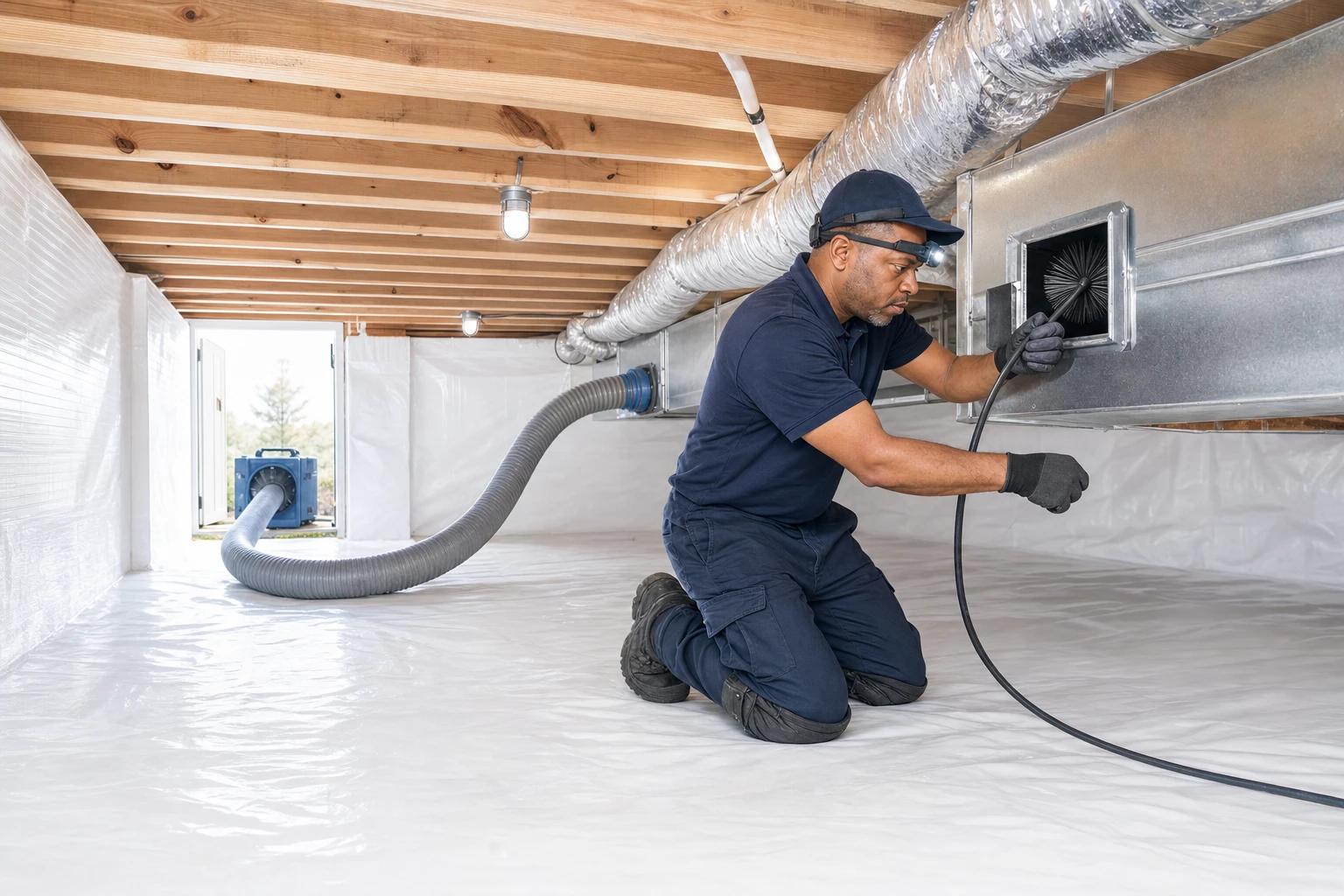
Dryer Vent Cleaning
Virginia homes range from houses with a short vent through an outside wall to townhouses and high-rise condos where dryer exhaust may travel a long…
Learn more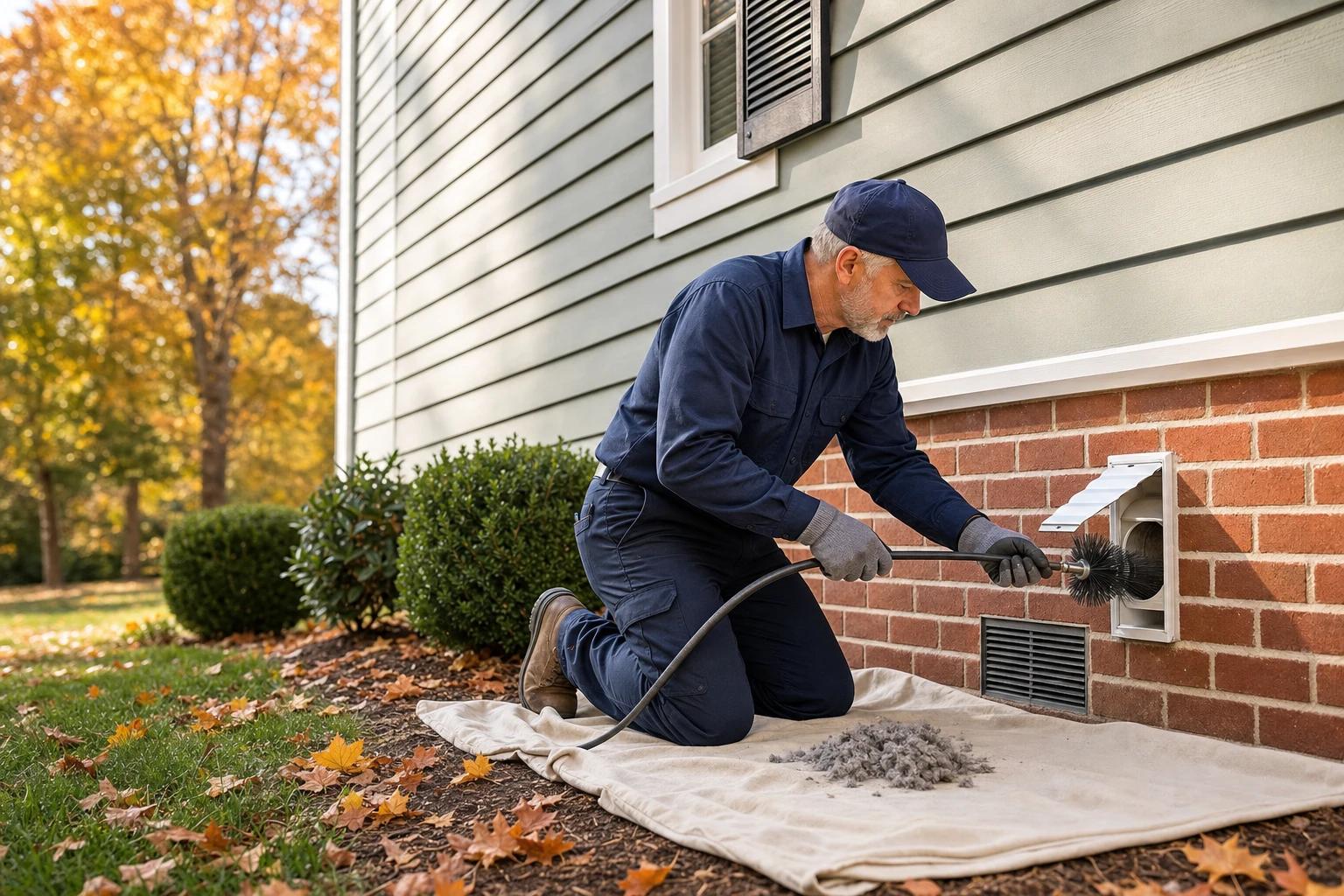
Local to Virginia
What Virginia Homes Have in Common
Humid summers and moderately cold winters
NOAA's state climate summary describes Virginia as having a humid climate with very warm summers and moderately cold winters. Average temperatures across the state range from 35 °F in January to 75 °F in July, and the west and north tend to be cooler and drier than the eastern coastal region.
The Department of Energy's Building America guide places Virginia's counties and independent cities in its Mixed-Humid climate region (IECC climate zone 4A). Most homes need both heating and cooling, and in a central system the same ductwork handles both.
Sources: NOAA NCEI, State Climate Summaries 2022: Virginia; U.S. DOE Building America / PNNL, Guide to Determining Climate Regions by County (2015)
Heat pumps and central air are widespread
In the Energy Information Administration's 2020 survey, about 27% of Virginia homes heated mainly with a central heat pump, about twice the national share of 13%, and about 56% with a furnace. About 83% used central air conditioning.
DOE notes that air-source heat pumps combine heating and cooling, so in a heat pump home the air handler and ducts move air in both the heating and cooling seasons, not just one.
Sources: U.S. EIA, 2020 RECS: Highlights for space heating in U.S. homes by state; U.S. EIA, 2020 RECS: Highlights for air conditioning in U.S. homes by state; U.S. DOE Energy Saver, Consumer Guide to Home Heating and Cooling
A wide mix of housing
Virginia's housing is varied. Census Bureau estimates for 2024 put the median year built at 1985, with roughly 28% of units built in 2000 or later. About 12% of units are single-family attached homes such as townhouses, about 7% are in buildings with 50 or more units, and about 4% are mobile homes.
About a third of Virginia homes have a basement, according to EIA's 2020 survey. Ducts can be in a basement ceiling, a crawl space, an attic, or a condo's mechanical closet, and each changes how the system is reached, so we ask about your home when you request an estimate.
Sources: U.S. Census Bureau, 2024 ACS 1-year estimates, Table B25035 (Median Year Structure Built); U.S. Census Bureau, 2024 ACS 1-year estimates, Table B25034 (Year Structure Built); U.S. Census Bureau, 2024 ACS 1-year estimates, Table B25024 (Units in Structure); U.S. EIA, 2020 RECS: Highlights for structural characteristics of U.S. homes by state


Cleaner ducts. Clearer dryer vents.
Every visit starts with a look at your system, so the work matches what your home actually needs.
- Supply & return ducts
- Registers & grilles
- Dryer vent lines
- Exterior vent hoods
How it works
What a Cleaning Visit Looks Like
A straightforward sequence, adjusted to your home and the service you choose.
- 1
Inspect
We look at the accessible ductwork or dryer vent run, note access points, and confirm the scope with you.
- 2
Protect & prepare
Floors and furnishings near the work area are covered, and registers or vent openings are prepared.
- 3
Clean
Accumulated dust, debris, or lint is loosened and removed from the components in scope using professional equipment.
- 4
Verify & review
We check the result, reassemble what was opened, and walk you through what we found and anything outside our scope.
Cities
Where We Work in Virginia
City pages list local details for areas where coverage is confirmed.
Virginia Beach
Virginia
Chesapeake
Virginia
Richmond
Virginia
Norfolk
Virginia
Newport News
Virginia
Alexandria
Virginia
Hampton
Virginia
Suffolk
Virginia
FAQ
Virginia Questions
- Virginia guide
Heat Pumps, Central Air, and Your Ducts: A Virginia Homeowner's Guide
In Virginia's mixed-humid climate, most homes need both heating and cooling, and many use one duct system for both: about 27% heat with a central heat pump and about 83% use central air (EIA, 2020). Because those ducts work through more of the year, filter changes and unblocked registers matter most. Duct cleaning is worth considering when there's excessive dust or debris or signs of pests, not on a fixed calendar.
Read the guide
How can I find out if you work in my part of Virginia?
Start the estimate form with your ZIP code. Virginia Air Duct Pros is a local brand of USA Air Duct Pros, and we confirm availability for your exact address before we book a visit.
What affects the estimate?
The number of heating and cooling systems and zones, the number of supply and return registers, and where the ducts run (basement, crawl space, attic, or mechanical closet). For dryer vents, the length and route of the run and whether it ends at a wall, a roof, or a building-managed exhaust. Building access rules in condos and apartments can matter too.
Should I schedule duct cleaning on a regular calendar?
No. EPA does not recommend that air ducts be cleaned routinely, only as needed, such as when they are clogged with excessive dust and debris or infested with vermin. For ongoing upkeep, EPA advises using the highest-efficiency filter your system's manufacturer recommends and changing filters regularly, and DOE recommends cleaning or replacing filters monthly during seasons of peak use.
Source: U.S. EPA, Should You Have the Air Ducts in Your Home Cleaned?; U.S. DOE Energy Saver, Consumer Guide to Home Heating and Cooling
How should I prepare for the visit?
Clear a path to the air handler or furnace and to the dryer, move furniture off registers and return grilles where you can, and secure pets. Let us know ahead of time about attic hatches, crawl space entrances, parking, or building access rules.
Do you repair or seal leaky ducts?
No. Cleaning and sealing are different jobs. ENERGY STAR estimates that in a typical house about 20 to 30 percent of the air moving through the duct system is lost to leaks, holes, and poorly connected ducts, and it recommends sealing with mastic or metal tape, never duct tape. That's HVAC contractor work; we'll point out obvious disconnections we notice.
Source: ENERGY STAR, Duct Sealing
Is Virginia Air Duct Pros its own company?
No. Virginia Air Duct Pros is the Virginia name of USA Air Duct Pros, used so pages, estimates, and scheduling stay specific to Virginia. It doesn't represent a separate company or a local office.
Request an appointment
Tell Us About Your Home
Two quick steps. We'll follow up to confirm availability and details for your address.
- 1We review your requestYour details go to the team for your area and to SEO Office OS, our own website-measurement app.
- 2We contact youWe confirm availability, what's covered for your home, and any questions about access.
- 3You decideNothing is scheduled until you've confirmed the details with us.