
 Illinois Air Duct Pros
Air duct & dryer vent cleaning
Air Duct & Dryer Vent Cleaning for Illinois Houses, Flats and Condos
Illinois Air Duct Pros is the name USA Air Duct Pros uses for its Illinois air duct and dryer vent cleaning pages. Start with your ZIP code in the estimate form, and we'll confirm whether your address is available before we book anything.
$99 Basic Air Duct Cleaning + FREE Inspection | $79 Basic Dryer Vent Cleaning
- Inspection before cleaning
- Floors & furnishings protected
- Air ducts & dryer vents
- Scope confirmed in your estimate
 Illustrative image
Choose Your Cleaning Service
Two basic cleaning options. Choose the service you need and request an appointment.
Basic Air Duct Cleaning
$99Basic cleaning with an inspection included at no extra charge.
FREE Inspection Included
We confirm exactly what's covered for your home when we contact you, before any appointment is scheduled.
Available in confirmed service areas. We confirm availability for your address before scheduling.
Get the $99 OfferSee What's Included
Basic Dryer Vent Cleaning
$79Basic dryer vent cleaning.
We confirm exactly what's covered for your home when we contact you, before any appointment is scheduled.
Available in confirmed service areas. We confirm availability for your address before scheduling.
Get the $79 OfferSee What's Included
The free inspection is included with Basic Air Duct Cleaning only.
Illinois services
Air Duct & Dryer Vent Cleaning in Illinois
Two focused services with a clear scope — here's what each involves for homes in the state.
Air Duct Cleaning
In Illinois, the first question is whether your home has ducts that can be cleaned. Most homes heat with a furnace and ductwork, but a meaningful…
Learn more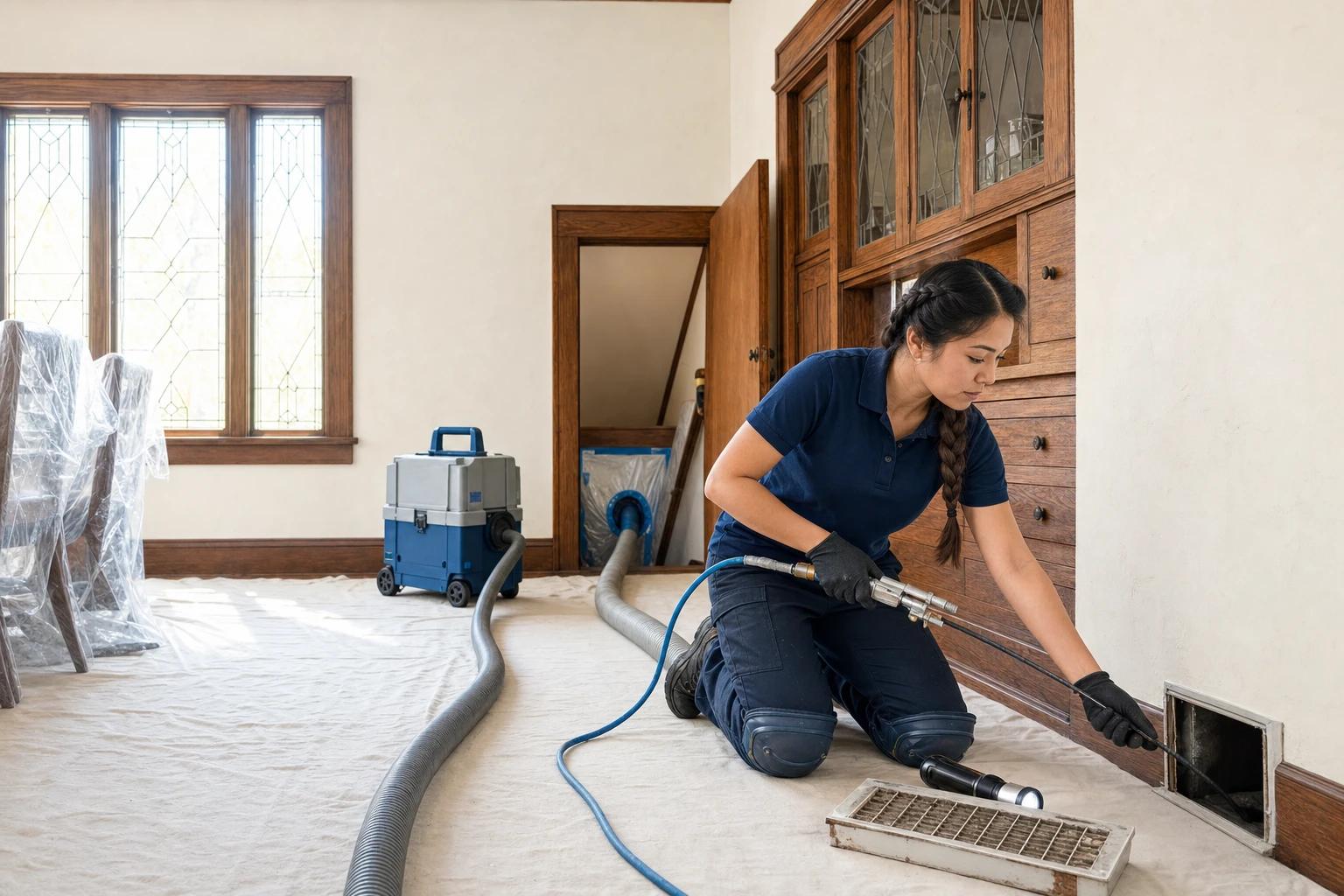
Dryer Vent Cleaning
Dryer vents in Illinois range from short runs through a basement wall to long routes inside apartment and condo buildings. Cleaning removes lint…
Learn more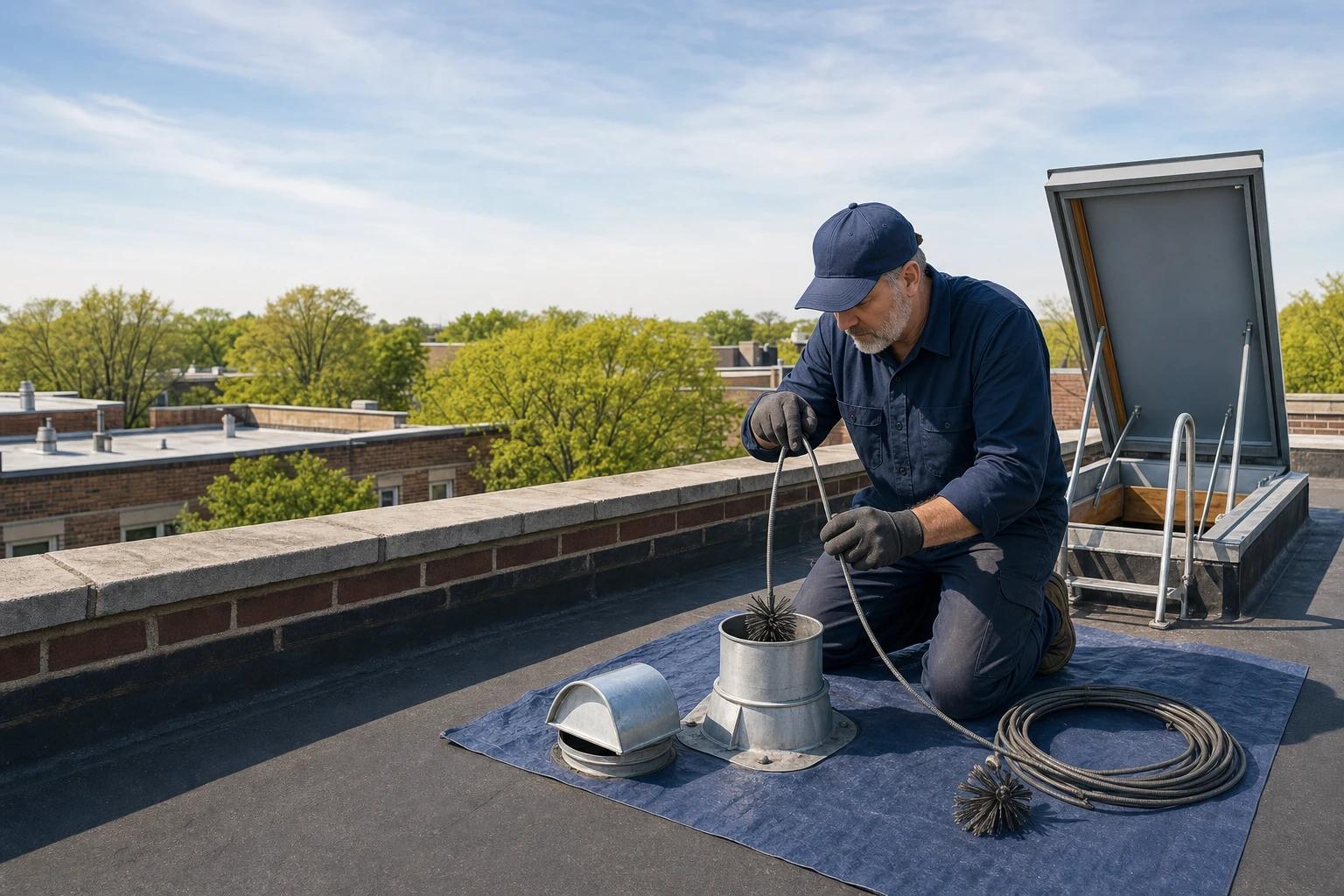
Local to Illinois
What Illinois Homes Have in Common
Northern and southern Illinois are different climates
Illinois is split between two climate zones. In the 2021 International Energy Conservation Code (IECC) climate map, compiled by county by Pacific Northwest National Laboratory for the U.S. Department of Energy, northern and central counties such as Cook, DuPage, Kane, Will, Winnebago, Peoria and Sangamon are cold zone 5A, while many southern counties, including Madison, St. Clair, Jackson and Williamson, are mixed-humid zone 4A.
NOAA's climate summary describes bitterly cold Arctic air in winter and warm, humid air from the Gulf of Mexico in summer, with Lake Michigan moderating temperatures in the northeast. Snow follows the same north-south pattern: the northeastern part of the state averages more than 40 inches a year, compared with less than 10 inches in the southernmost section.
Sources: PNNL for U.S. DOE: Guide to Determining Climate Zones by County, Building America and IECC 2021 Updates (PNNL-33270); NOAA NCEI: Illinois State Climate Summary
Not every Illinois home has heating ducts
In the U.S. Energy Information Administration's 2020 Residential Energy Consumption Survey, about 76% of Illinois homes used a furnace as their main heating equipment, and about 11% (roughly one in nine) used a steam or hot-water boiler.
The difference matters for duct cleaning. A furnace uses a blower and air ducts to distribute warm air; a boiler heats water and sends hot water or steam through a series of pipes. A home heated by radiators may have no heating ducts at all, or ductwork that serves only central air.
Sources: U.S. EIA: 2020 RECS, Highlights for space heating in U.S. homes by state; U.S. DOE Energy Saver: Home Heating Systems
Older, denser housing, especially in Chicago
Census Bureau survey data show that about 62% of Illinois housing units were built before 1980 and about one in five (20%) in 1939 or earlier. Chicago's housing is older still, with about 39% of units built in 1939 or earlier.
Chicago is also a city of shared buildings. Only about a quarter of its housing units are detached single-family homes; about 26% are in buildings with two to four units, and more than a quarter are in buildings with 20 or more units. In buildings like these, ducts, dryer vents and roof access may involve a condo association or building manager as well as the resident.
Source: U.S. Census Bureau: ACS 2024 1-year, Table DP04 (Illinois, Chicago)


Cleaner ducts. Clearer dryer vents.
Every visit starts with a look at your system, so the work matches what your home actually needs.
- Supply & return ducts
- Registers & grilles
- Dryer vent lines
- Exterior vent hoods
How it works
What a Cleaning Visit Looks Like
A straightforward sequence, adjusted to your home and the service you choose.
- 1
Inspect
We look at the accessible ductwork or dryer vent run, note access points, and confirm the scope with you.
- 2
Protect & prepare
Floors and furnishings near the work area are covered, and registers or vent openings are prepared.
- 3
Clean
Accumulated dust, debris, or lint is loosened and removed from the components in scope using professional equipment.
- 4
Verify & review
We check the result, reassemble what was opened, and walk you through what we found and anything outside our scope.
Cities
Where We Work in Illinois
City pages list local details for areas where coverage is confirmed.
Chicago
Illinois
Aurora
Illinois
Naperville
Illinois
Joliet
Illinois
Rockford
Illinois
Elgin
Illinois
Springfield
Sangamon County, Illinois
Peoria
Peoria County, Illinois
FAQ
Illinois Questions
- Illinois guide
Radiators, Central Air or Forced Air? Does Your Illinois Home Have Ducts?
Not every Illinois home has heating ducts. About 76% of Illinois homes heat mainly with a furnace, which moves air through ducts, but about 11% use a steam or hot-water boiler that sends heat through pipes to radiators or baseboards. Before booking duct cleaning, find out which system you have, whether central air adds separate ductwork, and, in condos and multi-unit buildings, who is responsible for shared parts.
Read the guide
How can I check whether my Illinois address is covered?
Enter your ZIP code in the estimate form. Availability is confirmed address by address before anything is scheduled, and this page isn't a promise that every Illinois community is covered.
What changes the estimate for an Illinois home?
Whether the home has ductwork at all, how many systems and registers it has, the type of building (house, two-flat, condo or apartment), how the ducts and dryer vent can be reached, and where the vent exits. Multi-unit buildings may also need management approval for access. Prices depend on these details, so we don't list them here.
How long will the work take?
It varies with the home and the job: the number of systems and registers, access, the dryer vent route, and whether you book one service or both. We'll share a time estimate once we know those details.
I just bought an older home. Should I have the ducts cleaned?
Not automatically. EPA recommends cleaning only as needed, such as when ducts are clogged with excessive dust and debris or particles are released into the home, when there's evidence of vermin, or when there's substantial visible mold inside sheet-metal ducts. Having the ducts looked at after a move is reasonable; the decision to clean should follow what's actually found.
Source: U.S. EPA: Should You Have the Air Ducts in Your Home Cleaned?
Is Illinois Air Duct Pros a local branch?
No. It's the name USA Air Duct Pros uses for its Illinois pages, not a separate company, office or branch.
Request an appointment
Tell Us About Your Home
Two quick steps. We'll follow up to confirm availability and details for your address.
- 1We review your requestYour details go to the team for your area and to SEO Office OS, our own website-measurement app.
- 2We contact youWe confirm availability, what's covered for your home, and any questions about access.
- 3You decideNothing is scheduled until you've confirmed the details with us.