
 Colorado Air Duct Pros
Air duct & dryer vent cleaning
Colorado Air Duct and Dryer Vent Cleaning, Registers to Vent Hood
Colorado Air Duct Pros is the Colorado name for USA Air Duct Pros' air duct and dryer vent cleaning. Enter your ZIP code in the estimate form to see whether we can reach your address, then request an estimate.
$99 Basic Air Duct Cleaning + FREE Inspection | $79 Basic Dryer Vent Cleaning
- Inspection before cleaning
- Floors & furnishings protected
- Air ducts & dryer vents
- Scope confirmed in your estimate
 Illustrative image
Choose Your Cleaning Service
Two basic cleaning options. Choose the service you need and request an appointment.
Basic Air Duct Cleaning
$99Basic cleaning with an inspection included at no extra charge.
FREE Inspection Included
We confirm exactly what's covered for your home when we contact you, before any appointment is scheduled.
Available in confirmed service areas. We confirm availability for your address before scheduling.
Get the $99 OfferSee What's Included
Basic Dryer Vent Cleaning
$79Basic dryer vent cleaning.
We confirm exactly what's covered for your home when we contact you, before any appointment is scheduled.
Available in confirmed service areas. We confirm availability for your address before scheduling.
Get the $79 OfferSee What's Included
The free inspection is included with Basic Air Duct Cleaning only.
Colorado services
Air Duct & Dryer Vent Cleaning in Colorado
Two focused services with a clear scope — here's what each involves for homes in the state.
Air Duct Cleaning
Most Colorado homes heat with a furnace — about 77% in EIA's 2020 survey — so in much of the state the ductwork carries warm air through a long…
Learn more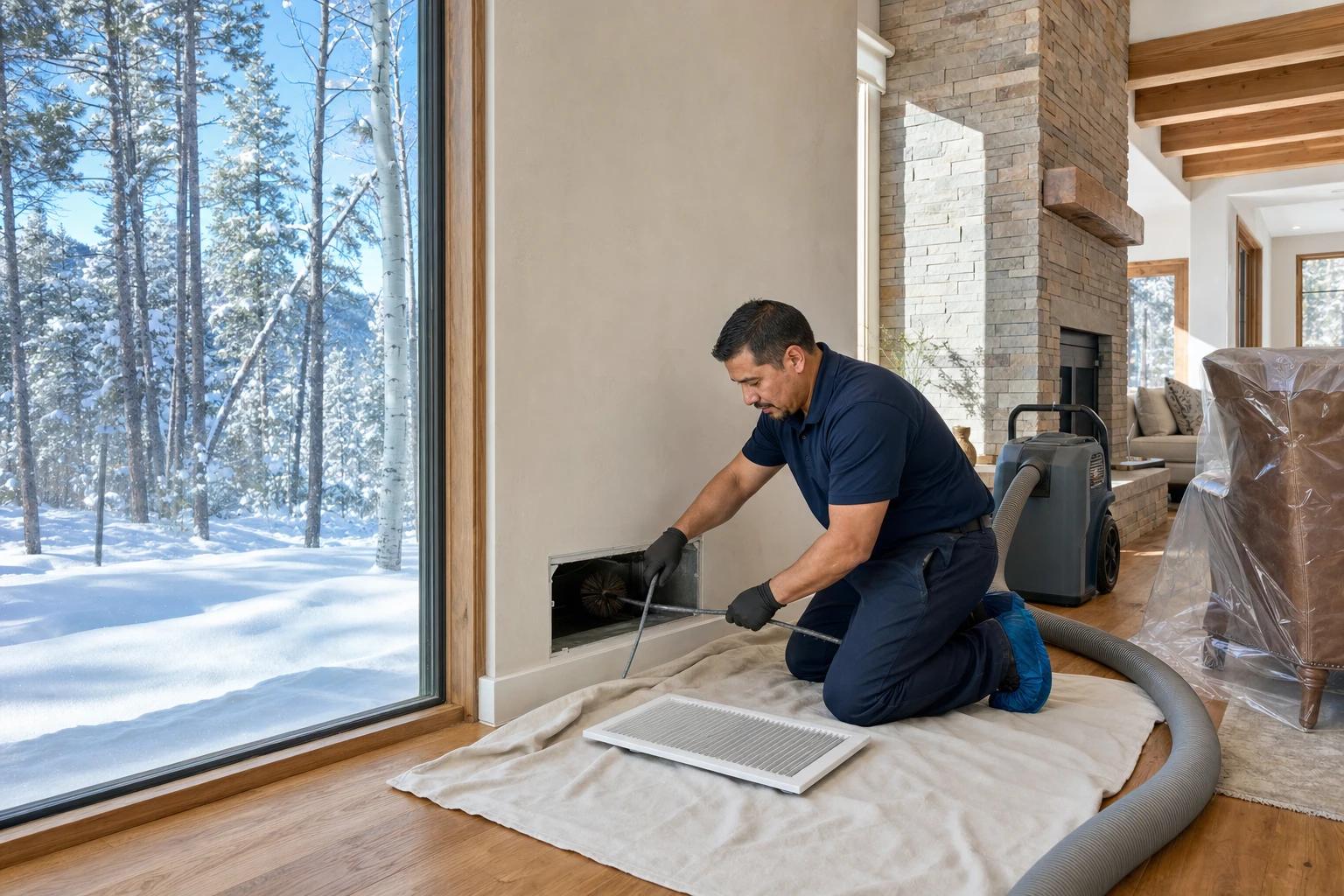
Dryer Vent Cleaning
Colorado Air Duct Pros clears lint from the transition duct, the vent run, and the exterior hood, and checks that exhaust air leaves the house while…
Learn more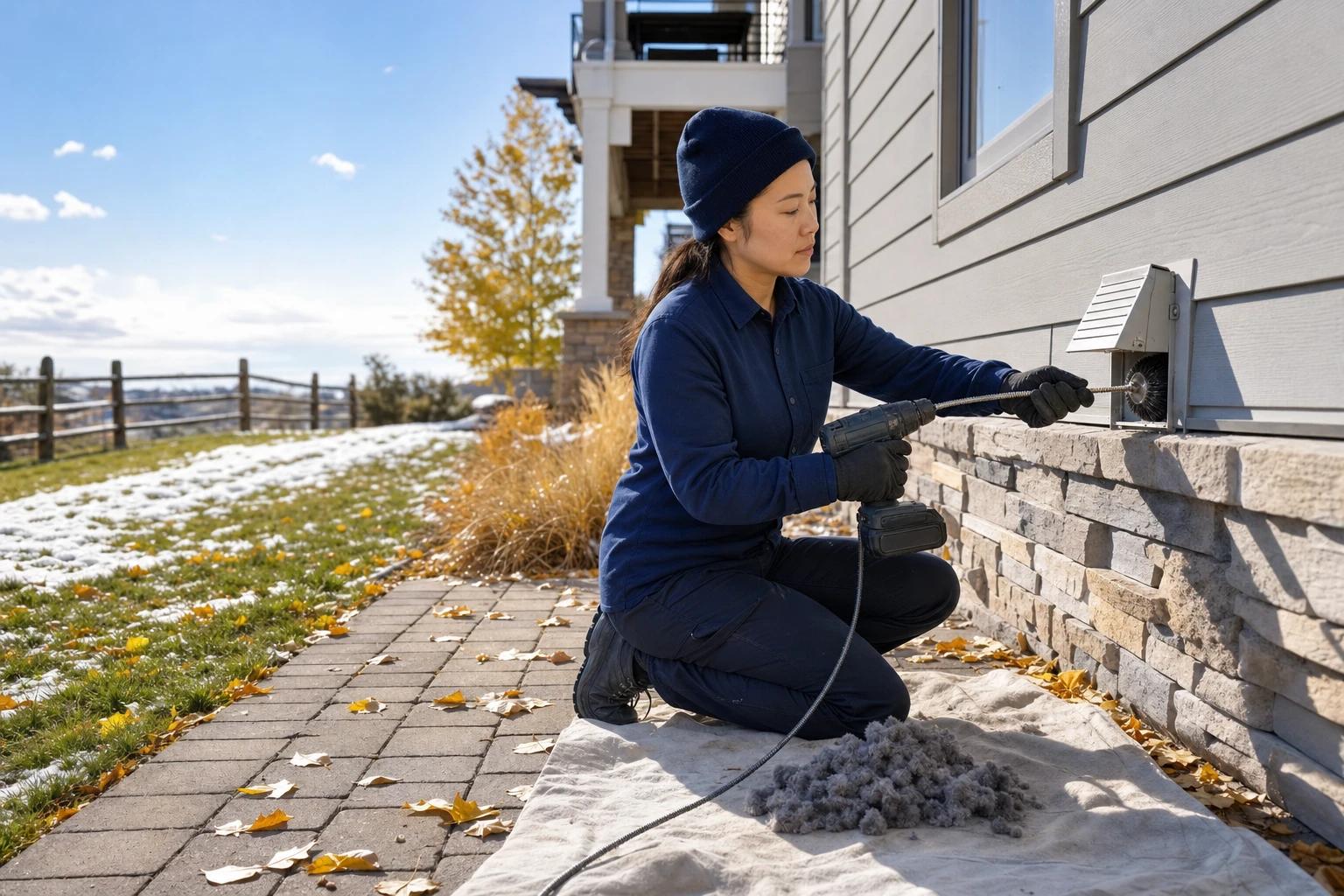
Local to Colorado
What Colorado Homes Have in Common
Climate zones from the plains to the high country
Colorado spans several climate zones. On the 2021 climate zone map used for energy codes, the Front Range counties — including Denver, Adams, Arapahoe, Boulder, Douglas, El Paso, Jefferson, Larimer, and Pueblo — are zone 5B: dry, and within the range the Department of Energy's climate-zone guide classes as cold, roughly 5,400 to 9,000 heating degree days a year. Mountain counties such as Summit, Lake, Grand, Gunnison, Pitkin, and Routt are zone 7, very cold, at roughly 9,000 to 12,600 heating degree days. A few southeastern counties, including Baca, Las Animas, and Otero, are mixed-dry zone 4B.
Across most of the state, that adds up to a long heating season, so the ductwork in a forced-air home carries warm air for much of the year.
Source: PNNL / U.S. DOE Building America — Guide to Determining Climate Zones by County (PNNL-33270, 2022)
Snow and exterior vents
Snow is a regular part of the heating season along the Front Range. The National Weather Service office in Boulder puts Denver's long-term average seasonal snowfall at about 56.6 inches, based on records from 1882 to 2025, with snow possible from fall well into spring.
That matters for anything that vents through a wall near the ground. USFA's carbon monoxide guidance includes keeping vents for the dryer, furnace, stove, and fireplace clear of snow and other debris, and Xcel Energy advises clearing exhaust vents for natural gas appliances of snow and ice so exhaust gases can escape outdoors.
Sources: National Weather Service Boulder — History of Snowfall Observations at Denver; U.S. Fire Administration — Carbon Monoxide Poisoning Prevention; Xcel Energy — Keep meters and exhaust vents clear of ice and snow (Oct. 2022)
Basements, furnaces, and not everyone has central air
In the U.S. Energy Information Administration's 2020 Residential Energy Consumption Survey (RECS), about 51% of Colorado homes had a basement, compared with about 30% nationally, and about 77% used a furnace — a system that sends warm air through ducts — as their main heating equipment. About 9% heated mainly with a steam or hot-water boiler, which supplies radiators, convectors, or pipes rather than air ducts.
Cooling is more mixed. About 82% of Colorado homes used some air-conditioning equipment, but only about 57% used central air (including central heat pumps), below the national figure of about 67%, and about 20% used individual units such as window units or ductless mini-splits. So some Colorado homes have ducts that carry heat in winter and sit idle in summer.
If your furnace and main duct lines are in a basement, whether it's finished affects what we can reach. About 25% of Colorado homes were built in 2000 or later, and about 63% are single-family detached houses.
Sources: U.S. EIA — Highlights for structural characteristics of U.S. homes by state, 2020 (RECS); U.S. EIA — Highlights for space heating in U.S. homes by state, 2020 (RECS); U.S. EIA — Highlights for air conditioning in U.S. homes by state, 2020 (RECS); U.S. EIA — RECS terminology
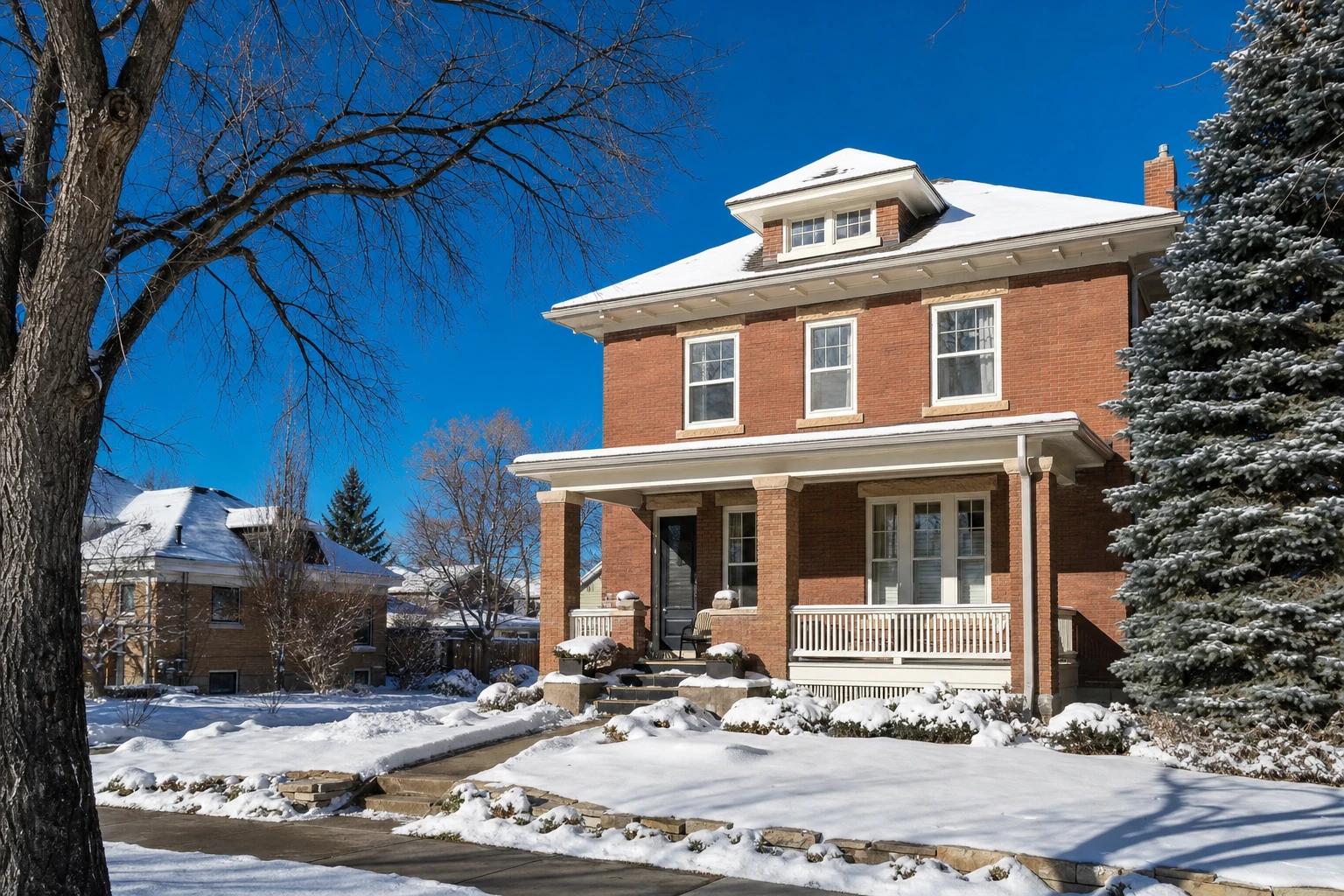

Cleaner ducts. Clearer dryer vents.
Every visit starts with a look at your system, so the work matches what your home actually needs.
- Supply & return ducts
- Registers & grilles
- Dryer vent lines
- Exterior vent hoods
How it works
What a Cleaning Visit Looks Like
A straightforward sequence, adjusted to your home and the service you choose.
- 1
Inspect
We look at the accessible ductwork or dryer vent run, note access points, and confirm the scope with you.
- 2
Protect & prepare
Floors and furnishings near the work area are covered, and registers or vent openings are prepared.
- 3
Clean
Accumulated dust, debris, or lint is loosened and removed from the components in scope using professional equipment.
- 4
Verify & review
We check the result, reassemble what was opened, and walk you through what we found and anything outside our scope.
Cities
Where We Work in Colorado
City pages list local details for areas where coverage is confirmed.
Denver
Denver, Colorado
Colorado Springs
El Paso, Colorado
Aurora
Colorado
Fort Collins
Larimer, Colorado
Lakewood
Jefferson, Colorado
Thornton
Colorado
Arvada
Colorado
Westminster
Colorado
FAQ
Colorado Questions
- Colorado guide
Snow, Ice, and Dryer Vents: A Colorado Winter Checklist
Along Colorado's Front Range, snow is part of the heating season, and a dryer vent hood low on a wall can end up buried. After storms, clear the hood and make sure its flap opens while the dryer runs; with a gas dryer, a blocked vent is also a carbon monoxide concern. If the outside is clear but the dryer still vents poorly, lint inside the vent may be the problem.
Read the guide
How do I know whether you serve my part of Colorado?
Enter your ZIP code in the estimate form. We confirm availability for your specific address before anything is scheduled. A Colorado page on this site isn't a promise that we cover the whole state.
Is Colorado Air Duct Pros its own company?
No. Colorado Air Duct Pros is the name USA Air Duct Pros uses for its Colorado pages. It doesn't indicate a separate company or a local office.
What affects the estimate?
For ducts: how many supply and return openings there are, how the system is laid out, where the furnace and main lines sit, and whether a finished basement limits access. For dryer vents: the vent's length and route, where it ends outside, and how both ends can be reached. We don't publish prices because each home is different.
How long does a cleaning take?
It depends on the home — the size and layout of the system, how many registers there are, how easy access is, and what we find. We'll give you an expected time window when we confirm the appointment.
Do you also do furnace service, duct sealing, or mold work?
No. We clean air ducts and dryer vents. Furnace and air conditioner repair, gas and electrical work, duct sealing or replacement, chemical treatments, and mold testing or remediation are outside our service.
Request an appointment
Tell Us About Your Home
Two quick steps. We'll follow up to confirm availability and details for your address.
- 1We review your requestYour details go to the team for your area and to SEO Office OS, our own website-measurement app.
- 2We contact youWe confirm availability, what's covered for your home, and any questions about access.
- 3You decideNothing is scheduled until you've confirmed the details with us.