
Ohio Air Duct Pros · Parma
Air Duct Cleaning in Parma, OH
Supply and return ducts, registers, and grilles cleaned of accumulated dust and debris, with the scope set in a written estimate. We'll confirm the service details for your Parma address before scheduling.
Basic Air Duct Cleaning
Basic cleaning with an inspection included at no extra charge.
FREE Inspection Included
Available in confirmed service areas. We confirm availability for your address before scheduling.
Get the $99 Offer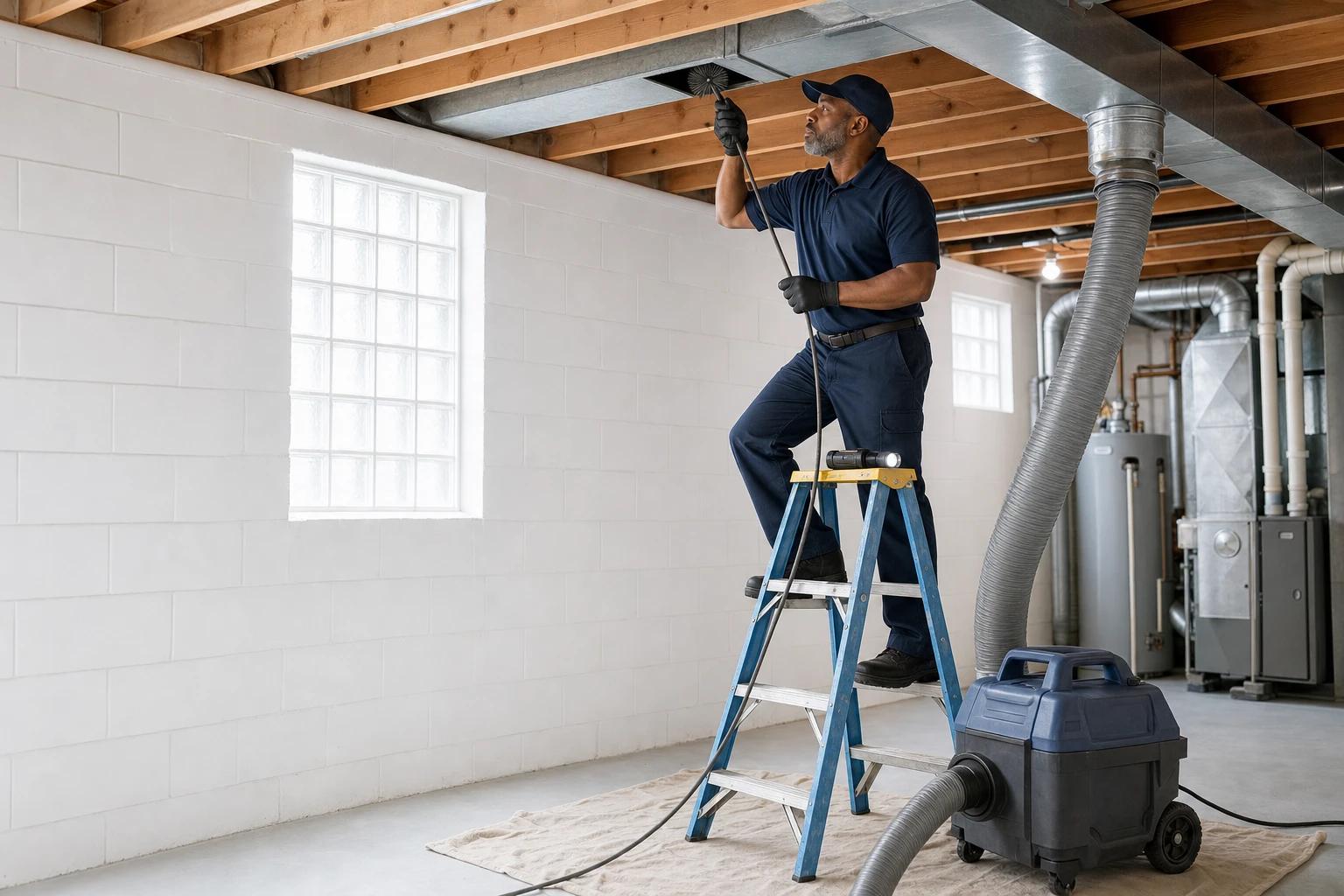 Illustrative image
Air Ducts in Parma
In Ohio, air duct cleaning usually means a forced-air furnace system and the ductwork, registers and return grilles connected to it. We remove built-up dust and debris from the parts of the system we can reach, and we tell you before work starts if a section is sealed behind a finished ceiling or otherwise out of reach.
We won't promise health results. EPA says duct cleaning has never been shown to actually prevent health problems, and it suggests considering cleaning when ducts are clogged with excessive dust and debris or particles are actually released into the home, when there is evidence of rodents or insects, or when there is substantial visible mold growth inside sheet-metal ducts. We don't diagnose or remediate mold.
Scope
What's Cleaned — and What Isn't
Air duct cleaning removes accumulated dust and debris from the parts of a forced-air heating and cooling system that are listed in your written estimate — typically the supply and return ducts, registers, grilles, and diffusers. We look at the system first, explain what we see, and confirm the scope in writing before any work begins. The EPA recommends cleaning ducts as needed rather than on a routine schedule, and notes that duct cleaning has never been shown to prevent health problems, so we stick to what cleaning actually does: remove accumulated dust and debris from the components that are cleaned.

Typically included
- Supply air ducts that carry heated or cooled air to your rooms
- Return air ducts and return grilles
- Supply registers, grilles, and diffusers, removed for cleaning where they come off without damage
- Accessible trunk lines and branch runs, reached through existing openings or access ports that are sealed afterward
- Final scope is confirmed in your written estimate: which runs and components are included, and how each is reached
Not included
- Heating or cooling coil cleaning, blower motor or fan housing service, and air handler interior cleaning — quoted separately only if offered and listed in your written estimate
- Chemical sanitizing, biocides, fogging, deodorizers, or duct sealants
- Mold testing, mold diagnosis, or mold remediation
- Duct repair, leak sealing, re-insulating, or duct replacement
- Furnace, air conditioner, or heat pump repair; refrigerant, gas line, or electrical work
- Handling suspected asbestos-containing materials, which requires a qualified specialist
- Supplying or replacing air filters
- Dryer exhaust vents, which are a separate service with their own estimate
Process
How Air Duct Cleaning Works
- 1
Inspect
We look at the air handler, registers, and accessible duct runs, note duct materials and any damage or moisture, and confirm in a written estimate what will and won't be cleaned before work starts.
- 2
Protect and prepare
The system is turned off, floors and furnishings near work areas are covered, and registers and openings are covered or sealed so loosened debris goes into collection equipment rather than into your rooms.
- 3
Clean
Accumulated dust and debris is loosened with brushes or air tools suited to the duct material — gentler methods for flexible duct and fiberglass duct board — and removed with vacuum collection. Registers and grilles are cleaned, and any access openings are sealed afterward.
- 4
Verify and review
We check the cleaned components visually, reinstall registers and grilles, restore the system, and walk you through what was cleaned, anything that couldn't be reached, and any issues — such as damage or moisture — that need a different kind of contractor.
How the inspection works
Before any cleaning is quoted, we look at your system: where the air handler sits, the supply registers and return grilles, and the inside of accessible duct runs where they can be reached without damage. The goal is to see whether there is substantial visible mold growth, signs of vermin, or excessive dust and debris — the situations EPA identifies as reasons to consider cleaning.
If the inspection doesn't show a clear reason to clean, we'll say so. EPA notes that if no one in the household suffers from allergies or unexplained symptoms, and a visual inspection shows no large deposits of dust or mold, having ducts cleaned is probably unnecessary.
The inspection is a visual check for cleaning purposes. It is not an HVAC performance test, a mold test, or an air-quality test.
- Where the ducts run and how each section can be reached
- Duct material — sheet metal, flexible duct, or fiberglass duct board — which affects which cleaning methods are appropriate
- Visible damage, disconnected runs, or moisture, which call for a repair contractor rather than cleaning
- Underlying causes such as leaks or pests, which EPA says must be corrected first or the problem will likely recur
Source: U.S. EPA — Should You Have the Air Ducts in Your Home Cleaned?
Access: attics, basements, crawlspaces, and multi-unit buildings
How the system is reached shapes the time and equipment a job needs. Air handlers and duct runs are often in attics, basements, crawlspaces, closets, or garages, and the technician needs a safe path to them.
Attics and crawlspaces need a clear, safe entry point, such as a hatch, pull-down stairs, or crawlspace door. Tight clearances, deep insulation, or unsafe footing can limit which runs can be reached; anything that can't be reached safely is noted in your estimate rather than skipped without mention.
Basements and utility rooms need a clear path to the furnace or air handler and to any exposed trunk lines.
Exterior and roof equipment: most home duct systems are serviced from inside. Rooftop units and ducts that pass through the roof are evaluated case by case, and roof work is done only where it can be done safely.
Condos, apartments, and townhomes often have rules about work in common areas, roof access, and working hours, and some duct runs may be shared or owned by the building. Check with your HOA or property manager before scheduling; their approval or access arrangements may be needed.
Older ductwork: suspect materials are left alone
The Consumer Product Safety Commission lists furnace ducts insulated with an asbestos blanket or asbestos paper tape among the places asbestos may be found in homes, and advises that asbestos material in good condition should usually be left alone. EPA adds that a trained and accredited asbestos professional should take any samples.
If we see wrap, tape or insulation on older ducts that could contain asbestos, we won't disturb it. We'll point it out so you can decide whether to have it evaluated before any cleaning goes ahead.
Sources: U.S. CPSC: Asbestos in the Home; U.S. EPA: Protect Your Family from Exposures to Asbestos
If water reached the furnace or ducts
EPA advises that if any part of an HVAC system was affected by a flood, it should not be used to dry out the house, and that cleaning and drying the system is a job for a professional. EPA also says that when duct insulation gets wet or moldy it cannot be effectively cleaned and should be removed and replaced by a qualified heating and cooling contractor.
Replacement is repair work, not cleaning, and it's outside what we do. Once repairs are finished and the system is dry, remaining sheet-metal ducts that simply hold debris can be discussed for cleaning.
Sources: U.S. EPA: Flood Cleanup to Protect Indoor Air and Your Health; U.S. EPA: Should You Have the Air Ducts in Your Home Cleaned?
What cleaning can't do
Duct cleaning removes accumulated dust and debris from the components that are cleaned. It does not repair or seal leaky ducts, fix disconnected or crushed runs, correct a poorly designed system, or replace damaged insulation.
EPA states that duct cleaning has never been shown to actually prevent health problems, and that little evidence exists that cleaning only the ducts improves system efficiency. We don't promise allergy relief, health outcomes, or lower energy bills.
Moisture and mold are a separate problem. EPA notes that controlling moisture is the most effective way to prevent biological growth in ducts, and that insulated ducts which get wet or moldy cannot be effectively cleaned and should be removed and replaced. We don't test for, diagnose, or remediate mold.
Underlying causes such as leaks, pests, or moisture need to be fixed first; otherwise, EPA warns, the problem will likely recur.
- Damaged, leaky, or disconnected ducts need a qualified HVAC contractor
- Furnace, air conditioner, gas, and electrical repairs are outside our scope
- Mold testing and remediation need a qualified mold professional
- Suspected asbestos-containing materials need a qualified specialist before any work
Source: U.S. EPA — Should You Have the Air Ducts in Your Home Cleaned?
Signs you may want an inspection
EPA does not recommend cleaning air ducts routinely — only as needed. It identifies three situations where you should consider having them cleaned:
Mold needs care: EPA notes that something that looks like mold may need laboratory analysis to confirm, and that the underlying moisture problem has to be fixed. A cleaning inspection is not mold testing.
Moving into a home with an unknown maintenance history or finishing a dusty renovation are common reasons people ask for a look; the inspection is what tells you whether cleaning is warranted.
- Substantial visible mold growth inside hard-surface (for example, sheet metal) ducts or on other parts of the heating and cooling system
- Ducts infested with vermin, such as rodents or insects
- Ducts clogged with excessive dust and debris, or particles actually being released into the home from supply registers
Source: U.S. EPA — Should You Have the Air Ducts in Your Home Cleaned?
FAQ
Air Duct Cleaning Questions
Should I book duct cleaning before Ohio's heating season?
There's no single right month. EPA does not recommend cleaning ducts routinely, only as needed, so the better trigger is a sign such as dust visibly blowing from supply registers. EPA separately recommends having fuel-burning furnaces inspected and serviced before each heating season; that is an HVAC tune-up, not duct cleaning.
Source: U.S. EPA: Should You Have the Air Ducts in Your Home Cleaned?
My basement flooded. Can you clean the ducts?
Not as a first step. EPA says a flooded HVAC system shouldn't be run to dry the house and should be checked and dried by a professional, and that wet or moldy duct insulation should be replaced rather than cleaned. After repairs, if bare sheet-metal ducts only need debris removed, we can look at cleaning. We don't do water-damage restoration or mold remediation.
Source: U.S. EPA: Flood Cleanup to Protect Indoor Air and Your Health; U.S. EPA: Should You Have the Air Ducts in Your Home Cleaned?
My Ohio home has radiators. Is there anything to clean?
Perhaps not ductwork. A boiler sends hot water or steam through pipes to radiators rather than pushing air through ducts. Some boiler-heated homes have separate ducts for central air, and a vented dryer's exhaust duct can be cleaned however the house is heated. Tell us what you have and we'll say whether a visit makes sense.
How often should air ducts be cleaned?
There is no universal schedule. EPA does not recommend routine duct cleaning; it recommends cleaning as needed — for example, when there is substantial visible mold growth, vermin, or excessive dust and debris. An inspection is how you find out whether your system needs it.
Source: U.S. EPA — Should You Have the Air Ducts in Your Home Cleaned?
Will duct cleaning help my allergies or make my air healthier?
We can't promise that. EPA states that duct cleaning has never been shown to actually prevent health problems, and studies do not conclusively show that dirty ducts raise dust levels in homes. What cleaning does is remove accumulated dust and debris from the components that are cleaned. For health concerns, talk with a medical professional.
Source: U.S. EPA — Should You Have the Air Ducts in Your Home Cleaned?
Will it lower my energy bills?
We don't promise energy savings. EPA notes that some research suggests cleaning heating and cooling components such as coils, fans, and heat exchangers may improve efficiency, but that little evidence exists that cleaning only the ducts improves system efficiency.
Source: U.S. EPA — Should You Have the Air Ducts in Your Home Cleaned?
Do you sanitize or spray chemicals in the ducts?
Not as a routine step. Our standard service is mechanical cleaning — removing dust and debris — without chemical sanitizers, fogging, or sealants. EPA advises against allowing biocides or sealants unless you fully understand their pros and cons.
Source: U.S. EPA — Should You Have the Air Ducts in Your Home Cleaned?
Do you clean the furnace coil or blower too?
Coil cleaning, blower or fan service, and air handler interior cleaning are not part of our standard duct cleaning. They are quoted separately only if offered, and anything included is listed in your written estimate. EPA's description of duct cleaning covers components beyond the ducts — including coils, drain pans, and the fan and its housing — so it's worth asking exactly what any estimate includes.
Source: U.S. EPA — Should You Have the Air Ducts in Your Home Cleaned?
What if I think there's mold in my ducts?
We don't diagnose or remediate mold. EPA notes that suspected mold may need laboratory analysis to confirm, that the moisture causing it must be fixed, and that insulated duct material that is wet or moldy cannot be effectively cleaned and should be removed and replaced. If you suspect mold, contact a qualified mold professional first.
Source: U.S. EPA — Should You Have the Air Ducts in Your Home Cleaned?
Are air ducts and a dryer vent the same thing?
No. Air ducts move heated and cooled air through your home; a dryer vent carries hot, lint-laden air from your clothes dryer to the outdoors. They are separate systems with separate concerns, and we clean them as separate services.
Request an appointment
Tell Us About Your Home
Two quick steps. We'll follow up to confirm availability and details for your address.
- 1We review your requestYour details go to the team for your area and to SEO Office OS, our own website-measurement app.
- 2We contact youWe confirm availability, what's covered for your home, and any questions about access.
- 3You decideNothing is scheduled until you've confirmed the details with us.